
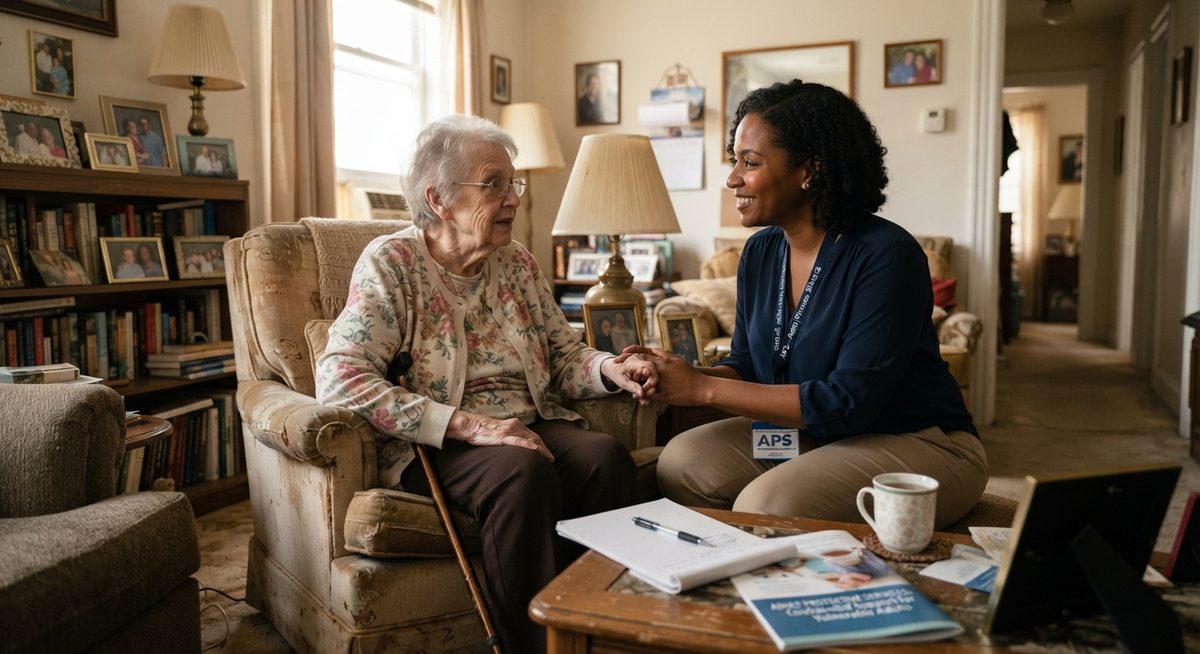
Adult Protective Services (APS) plays a critical role in safeguarding older adults and vulnerable individuals from abuse, neglect, and exploitation. While APS investigations are handled by specialized social service caseworkers, emergency personnel—such as police officers, emergency medical technicians (EMTs), and firefighters—are frequently the first responders when an acute crisis occurs.
Receiving a call or having emergency personnel and APS evaluate a loved one can be profoundly stressful. Knowing what these agencies do and how to respond ensures your loved one stays safe while their rights and dignity are respected.
What is Adult Protective Services?
APS agencies exist in every state to investigate reports of suspected mistreatment, neglect (including self-neglect), financial exploitation, and physical or emotional abuse targeting adults aged 60 and older or younger adults with disabilities.
Unlike law enforcement, whose primary focus is criminal investigation and public safety, APS caseworkers operate under a social-work model. Their objective is to evaluate risk, protect the individual, and connect them with voluntary supportive services (such as in-home care, medical assistance, or counseling) while honoring personal autonomy as much as possible.
Why Emergency Personnel Might Be Involved
In critical situations, emergency personnel may be dispatched alongside or prior to an APS investigation. This typically happens if:
- There is an immediate threat to life, health, or safety.
- A neighbor, family member, or mandatory reporter calls 911 due to a severe medical emergency, unmanaged self-neglect, or suspected acute abuse.
- APS caseworkers request a joint wellness check with law enforcement because they suspect physical danger or are being denied entry to a vulnerable adult's home.
What to Do If Emergency Personnel or APS Are Called for a Loved One
If you are notified that emergency responders or APS caseworkers have stepped in to help a loved one, keeping a clear head and knowing your role can significantly ease the process.
1. Prioritize Immediate Safety and Medical Needs
- Cooperate with medical evaluation: If EMTs or paramedics are on the scene, allow them to thoroughly examine your loved one. If they recommend transport to a hospital for acute medical stabilization or dehydration, support that decision.
- Ensure a smooth transition of information: Provide responders with a concise list of your loved one's medications, medical conditions, primary care doctor, and any legal documents like power of attorney (POA) or healthcare directives.
2. Verify Identity and Remain Calm
- Check credentials: If APS workers or law enforcement arrive at a residence, respectfully ask for their identification, agency names, and business cards.
- Maintain a cooperative tone: Responders and caseworkers are doing a job mandated to protect vulnerable populations. Hostility can escalate tensions unnecessarily; clear, factual communication yields the best results.
3. Understand Your Loved One's Rights
- Autonomy and consent: Unless a court has deemed an individual legally incompetent or appointed a guardian, capable older adults generally have the right to make their own choices—even choices others disagree with. APS cannot force a competent adult to accept services or move against their will.
- Confidentiality: APS protects the identity of the reporting party, meaning they may not be able to tell you who called. Focus on resolving the underlying concerns rather than tracking down the source of the report.
4. Address Underlying Issues and Seek Support
Reports to APS often stem from underlying pressures, such as severe caregiver burnout, complex medical needs that have outstripped family resources, or cognitive decline that makes safe living difficult.
- Work collaboratively on a care plan: If APS proposes safety modifications (such as installing a home alert system, arranging home health aides, or modifying the home), lean into these resources.
- Consult professionals: If you feel your family's rights are being mismanaged or if legal complexities arise regarding care decisions, consulting an elder law attorney can provide vital guidance.