
Building strength and balance is the most effective “insurance policy” against falls. As we age, we naturally lose muscle mass and bone density, but the body remains remarkably adaptable—you can improve your stability at any age.
The goal of fall-prevention exercise is to strengthen the “anti-gravity” muscles (the legs and core) and improve proprioception (your brain’s awareness of where your limbs are).
1. Sit-to-Stands (The Functional Powerhouse)
This is arguably the most important exercise for seniors because it mimics the most common daily movement: getting out of a chair or off a toilet.
How to do it: Sit on a sturdy chair with feet flat on the floor. Without using your hands to push off, stand up straight. Pause, then slowly lower yourself back down.
Why it works: It builds the quadriceps and glutes, which are essential for catching yourself if you stumble.
Challenge: Try to do 10 reps twice a day.
2. Heel-to-Toe Walk (The Tightrope)
This exercise directly targets balance by narrowing your base of support.
How to do it: Place the heel of one foot directly in front of the toes of the other foot, so they are touching (or as close as possible). Walk in a straight line for 10–20 steps.
Safety tip: Perform this next to a wall or a kitchen counter so you can reach out for support if you wobble.
Why it works: It trains your brain to maintain balance while your center of gravity is shifting.
3. Single-Leg Stance
Being able to balance on one leg is a primary indicator of fall risk. This move strengthens the stabilizing muscles around the ankles and hips.
How to do it: Stand behind a sturdy chair and hold the back for balance. Lift one foot off the ground and hold for 10–30 seconds. Repeat on the other side.
Why it works: Walking is essentially a series of one-legged balances. Improving this skill makes every step safer.
4. Side Leg Raises
Lateral (side-to-side) stability is often overlooked, but it is crucial for navigating crowds or stepping over obstacles.
How to do it: Stand behind a chair. Keeping your back straight and toes pointing forward, slowly lift one leg out to the side. Lower it back down.
Why it works: This targets the hip abductors. Strong hips prevent your pelvis from dropping, which is a common cause of tripping.
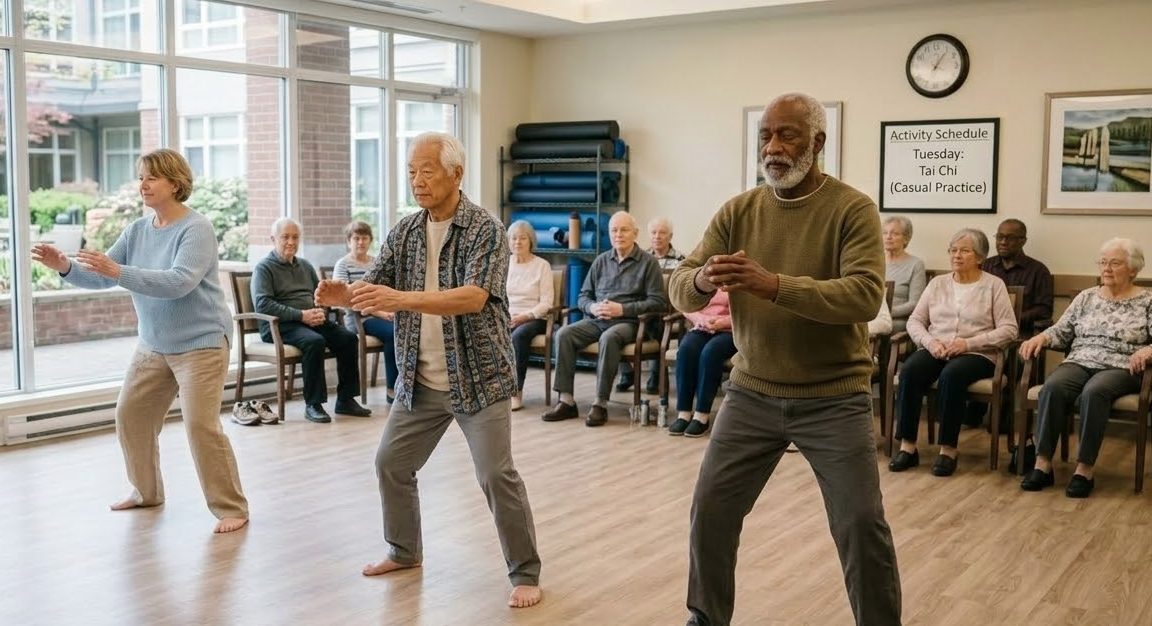
5. Tai Chi (The Gold Standard)
While not a single exercise, Tai Chi is a series of flowing, meditative movements that is scientifically proven to reduce fall risk by up to 47%.
How to do it: Look for “Tai Chi for Arthritis” or “Tai Chi for Balance” classes at local community centers.
Why it works: It emphasizes weight shifting, core rotation, and mindful movement, all of which are critical for staying upright in the real world.
A Note on Safety
Before starting a new routine, it’s always a good idea to check in with a physical therapist or doctor, especially if you have existing joint pain or heart conditions.
The golden rule: never exercise in a way that causes sharp pain. “Feeling the burn” in your muscles is fine, but pain in the joints means you should stop and adjust.