
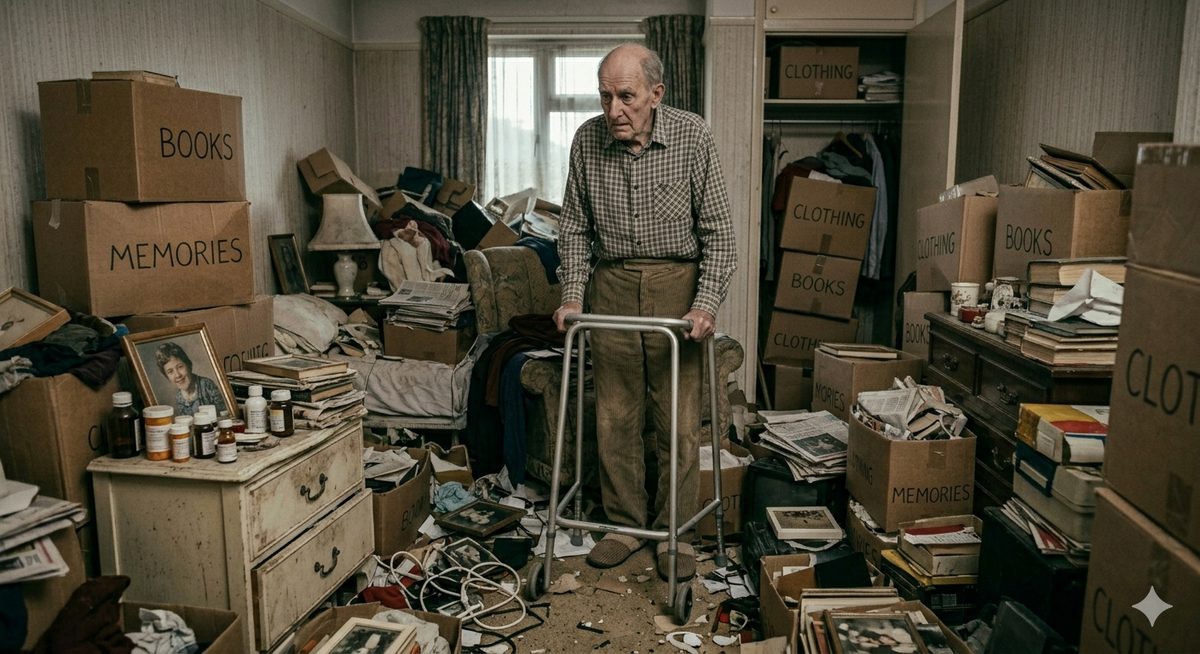
When we think of a vibrant retirement, we often picture downsizing to a neat condo, traveling, or hosting family gatherings. But inside millions of homes across the country, a quiet, paralyzing crisis is unfolding.
Hoarding disorder, defined as the persistent difficulty discarding or parting with possessions, regardless of their actual value, disproportionately weighs on the elderly population. While it affects roughly 2% of the general population, statistics show that it impacts over 6% of adults aged 65 and older. As generations shift and the population ages, understanding the intersection of aging and hoarding behavior has never been more urgent.
Why It Escalates with Age
Hoarding behavior often starts early in life, but it tends to worsen chronically with age. By the time a person reaches their senior years, several factors converge to turn a lifelong habit of "saving" into a dangerous environment:
- Accumulation of Loss: Aging is frequently marked by grief, the loss of a spouse, a career, physical mobility, or independent living. Objects often become emotional stand-ins for the people or identity that have slipped away.
- Cognitive Decline and Executive Dysfunction: Research reveals that hoarding disorder is tied to distinct neural patterns involving deficits in decision-making, attention, and organization. When normal age-related cognitive decline or dementia is added to the mix, deciding what to keep and what to discard becomes cognitively overwhelming.
- Physical Limitations: An older adult may want to clear a space but lacks the physical stamina, vision, or strength to bag up items or drive them to a donation center.
The Compounded Dangers for Seniors
While hoarding is distressing at any age, the physical vulnerabilities of older adults exponentially increase the risks:
- Falls & Mobility: Cluttered walkways make it impossible to safely navigate a home, let alone use a cane, walker, or wheelchair. According to senate reports, 80% of seniors experiencing hoarding struggle to move safely through their homes.
- Malnutrition & Fire Hazards: Piles of items often block major appliances. Over half of seniors who hoard lose access to their kitchens, preventing them from preparing healthy meals. Blocked doorways and heating vents also create extreme fire traps.
- Social Isolation: Extreme clutter breeds deep shame. Seniors will stop allowing family, friends, neighbors, or even home health aides inside, leading to profound loneliness and a total breakdown of their care network.
The Caregiver's Dilemma: How to Help Without Hurting
For adult children and family members, discovering the extent of a parent's hoarding is deeply shocking. The natural instinct is to swoop in, rent a dumpster, and purge the house while the parent is out. This is almost always a catastrophic mistake.
Forced cleanups do not treat the underlying psychological disorder and can cause severe emotional trauma, fracturing the family dynamic and causing the senior to hoard even more aggressively to replace the lost items.
Instead, experts recommend a specialized, empathetic framework:
1. Shift the Focus to Safety, Not Cleanliness
Instead of arguing over the volume of things, center the conversation on safety and functionality. Use "I" statements, such as: "I love you and I'm worried that a paramedic wouldn't be able to reach your bedroom if you had an emergency."
2. Avoid Devaluing Language
Never refer to a senior's possessions as "trash," "junk," or "clutter." To them, these items represent security, memories, or a strict ethos of avoiding waste. Frame cleaning as a way to "find the treasures" or make the home more usable.
3. Practice "Harm Reduction"
You may not get the house completely pristine, and that is okay. Focus on small, functional victories: clearing a two-foot wide path through hallways, making sure the oven can be opened safely, and removing items from the shower.
4. Recruit a Team of Professionals
Hoarding is a chronic psychiatric condition that requires specialized care. Effective treatment models generally include:
- Cognitive Behavioral Therapy (CBT): The gold standard for hoarding disorder, helping the individual reframe their relationship with objects and build decision-making skills.
- Certified Senior Move Managers or Specialized Downsizers: These professionals are explicitly trained to navigate the emotional and physical complexities of senior clutter without causing panic or shame.
Light at the End of the Hallway
Addressing hoarding in the elderly requires an immense amount of patience, time, and empathy. It is a journey measured in inches, not rooms. By treating the person with dignity and separating their identity from the clutter, families can help their loved ones reclaim not just their physical space, but their quality of life, safety, and connection to the world.
For families navigating this challenge, hearing from experts can offer valuable perspective. A discussion on treating hoarding in older adults features clinical insights into why the disorder is so resistant to standard intervention and how exposure therapy can help seniors build the skills to let go safely.