
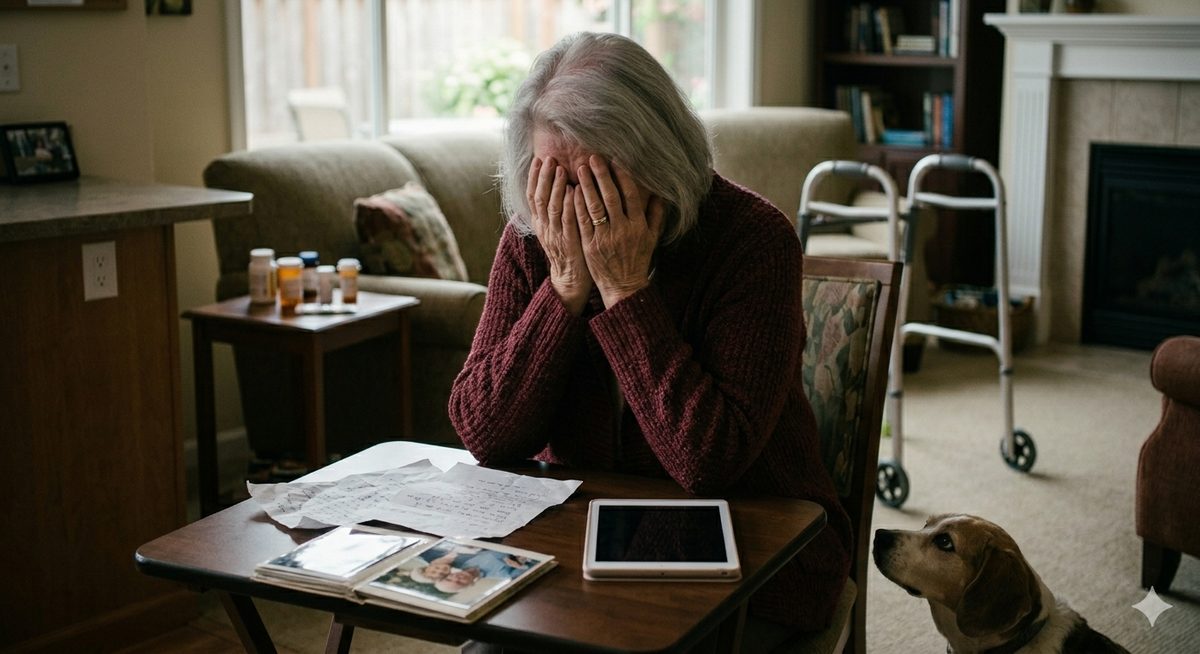
In 2026, the intersection of an aging population and a rapidly evolving healthcare landscape has brought the issue of mental health crises in the elderly to the forefront. While we often focus on the physical vulnerabilities of aging, the psychological "breaking points" can be just as dangerous—and far more subtle.
A mental health crisis in a senior is rarely a loud, sudden event. More often, it is a quiet "fading away" or a sharp change in personality that families may mistake for "just getting older."
Perhaps the greatest crisis in 2026 is medical ageism. Too often, doctors dismiss psychiatric symptoms as "dementia" without checking for a UTI, a vitamin deficiency, or simple loneliness. Being an advocate means demanding a full medical clearance before accepting a psychiatric diagnosis.
1. The Triggers: Why Crises Occur in Later Life
In 2026, research highlights that elderly mental health crises are rarely caused by a single event. Instead, they are the result of "stacking stressors":
- Biological sensitivities: as we age, brain chemistry and liver function change, making seniors more sensitive to alcohol and medication. A dose that was fine at age 50 can cause hallucinations or suicidal ideation at age 80.
- The "loss multiplier": seniors often face a "snowball effect" of grief—losing a spouse, followed by the loss of a driver's license (independence), and then a move from a family home.
- Medical comorbidity: chronic pain and terminal diagnoses are leading triggers for "preemptive grief" and severe depressive episodes.
- Financial insecurity: with rising costs of care in 2026, "spending down" assets to qualify for Medicaid is a significant source of acute anxiety and hopelessness.
2. Crisis vs. Normal Aging: How to Tell
One of the biggest barriers to intervention is the myth that "being sad or confused is part of being old." It isn't. Here is how normal aging compares to a mental health crisis across common areas:
- Memory: Normal aging looks like forgetting where keys are, then remembering later. A crisis looks like forgetting how to use keys, or disorientation in the home.
- Mood: Normal aging looks like feeling "blue" after a specific loss. A crisis looks like persistent apathy, "emotional flatness," or extreme irritability.
- Hygiene: Normal aging looks like needing more time to get ready. A crisis looks like sudden neglect of bathing, hair care, or changing clothes.
- Social behavior: Normal aging looks like preferring small groups over loud parties. A crisis looks like complete withdrawal, refusing to answer the phone or door.
- Sense of reality: Normal aging looks like occasional confusion during high stress. A crisis looks like hallucinations (seeing things) or paranoia (believing others are stealing).
3. The 2026 Resource Toolkit
If you or a loved one are in the middle of a crisis, the "old" way of going to a crowded, chaotic ER can actually make symptoms worse. Modern 2026 resources include:
- 988 Suicide & Crisis Lifeline: you can call or text 988 for immediate support. They have specialized training for the aging and disability population.
- Mobile Rapid Response Teams (MRRT): in many areas, you can request a team of social workers and nurses to come to the home rather than taking the senior to the hospital.
- Geriatric Regional Assessment Teams (GRAT): these teams provide outreach for seniors at risk of losing their housing due to behavioral issues.
- The Friendship Line (1-800-971-0016): a dedicated 24-hour toll-free line specifically for older adults and their caregivers.
4. What to Do in an Immediate Crisis
If a senior is expressing a desire to self-harm, is physically aggressive, or has stopped eating or drinking:
- Safety first: remove access to firearms or stockpiled medications.
- De-escalate: speak in low, calm tones. Avoid "correcting" their reality if they are hallucinating; instead, acknowledge the feeling behind the hallucination.
- Call for a wellness check: request a "CIT-trained" (Crisis Intervention Team) officer if you must involve law enforcement, as they have specific training in mental health.
- Prepare the medication list: have a list of every pill they take ready for the responders.
If you and/or professionals are unable to de-escalate the situation and your loved one is deemed a hazard to their own or someone else's wellbeing, they will most likely be transported to an emergency room and possibly transferred to a geropsychiatric unit.
A geropsychiatric unit (often called a "geropsych unit") is a specialized, secure hospital wing designed for the short-term stabilization of older adults experiencing acute mental health crises.
In 2026, most geropsych admissions happen through a hospital emergency room. If a senior is in crisis, they are evaluated by an ER doctor to ensure they are medically stable before being transferred to the locked geropsych wing.
Admission can be voluntary (the senior agrees to stay) or involuntary (if a doctor determines they are a danger to themselves or others and meet state legal criteria).
Unlike a standard nursing home or memory care facility, a geropsych unit is a high-level medical environment. It is where seniors go when their behaviors or psychological symptoms become too severe to be managed safely in their typical living situation.
Who Is a Geropsych Unit For?
Most units serve patients aged 65 and older, though some admit patients as young as 55 if they have age-related conditions like early-onset dementia. Common reasons for admission include:
- Acute danger: suicidal thoughts, self-harm, or physical aggression toward others.
- Severe psychosis: hallucinations or delusions that cause extreme distress or prevent the person from eating or sleeping.
- Medication stabilization: when a senior needs a rapid change in psychiatric medications that requires 24/7 monitoring for side effects or drug interactions.
- Dementia with "behaviors": when a resident in memory care becomes combative, refuses essential care, or experiences severe "sundowning" that puts them at risk.
Key Differences: Geropsych vs. Memory Care
It is common for families to confuse these two, but they serve very different purposes. A geropsych unit is an inpatient setting focused on crisis stabilization and diagnosis, typically lasting 7 to 14 days, staffed by psychiatrists, RNs, and social workers, in a locked hospital setting with medical beds, offering group therapy, occupational therapy, and medication checks.
Memory care, by contrast, is a residential setting focused on long-term housing and comfort, typically lasting months or years, staffed by caregivers and med techs, in homelike apartments with secure gardens, offering socialization, music, and crafts.
What Happens During a Stay?
A stay in a geropsych unit is intensive. The focus is on finding the root cause of a behavioral change—which, in seniors, is often a mix of physical and mental factors.
- Comprehensive assessment: the team looks for underlying medical issues like UTIs, vitamin deficiencies, or thyroid problems that can mimic psychiatric symptoms.
- Multidisciplinary rounds: a team consisting of a geriatric psychiatrist, a pharmacist, a social worker, and an occupational therapist meets daily to review the patient's progress.
- Environmental safety: the units are designed to be senior-friendly with specialized flooring to prevent falls, grab bars, and bright lighting to reduce confusion.
- Discharge planning: this begins on day one. The social worker works with the family to determine if the patient can return home or if they need a higher level of care (like an adult family home or skilled nursing).
Pro-Tip: The "Medication Wash"
One of the most valuable things a geropsych unit does is a "medication wash." Many seniors are over-medicated (polypharmacy), which can cause confusion and aggression. Geropsychiatrists are experts at carefully removing unnecessary drugs to see the patient's true baseline.