
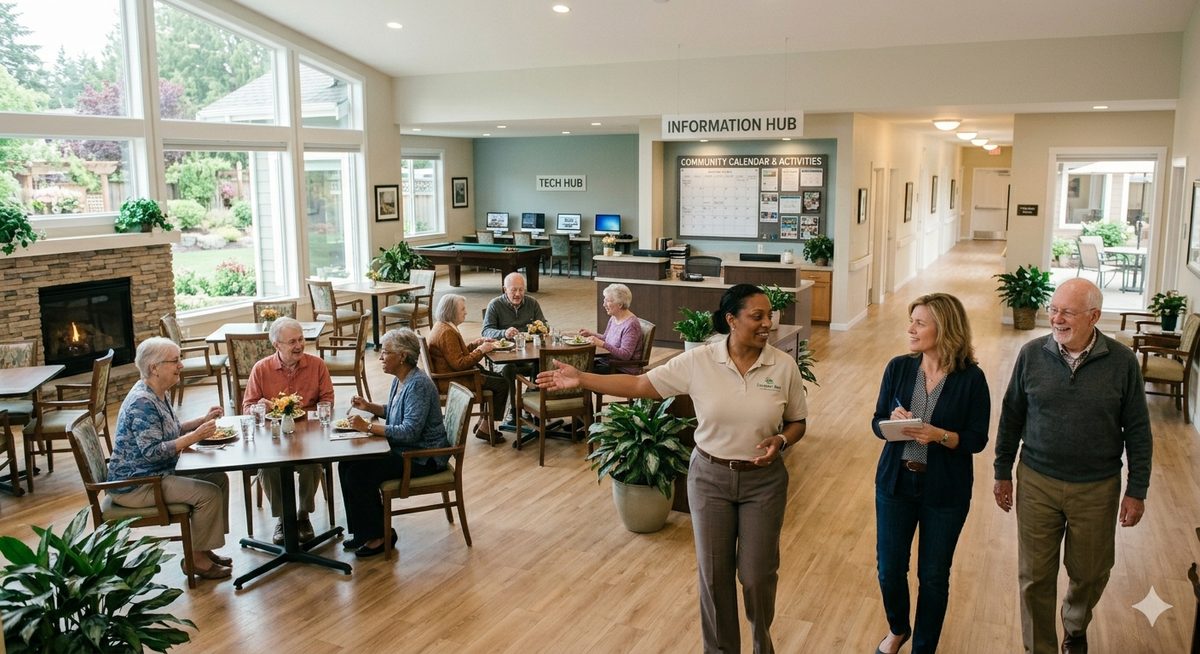
Moving into an assisted living community is a significant life transition. While many facilities look like luxury hotels on the surface, the "soul" of a community lies in its care quality, staffing stability, and financial transparency.
As of 2026, new regulations have increased transparency requirements for staffing and medical reporting, giving families more leverage than ever to ask pointed questions. Here is a comprehensive guide on what to ask before signing a contract.
1. Care and Medical Services
The most critical factor is how the community handles your health today—and how they will handle it as you age.
- What is your staff-to-resident ratio? Ask for specific numbers for both daytime and overnight shifts. A lower ratio generally indicates more personalized care.
- Is there a registered nurse (RN) on-site 24/7? Some facilities only have nurses "on-call," which can lead to delays during a medical emergency.
- How are care plans developed and updated? Ask how often assessments occur and how much input you and your family have in the process.
- What is the "discharge trigger"? Under what health conditions would you be required to move to a higher level of care (like skilled nursing or memory care)?
2. Staffing and Training
The quality of an assisted living home is only as good as the people working there. High turnover is often a red flag for poor management or burnout.
- What is your staff turnover rate? Ask how many of the current caregivers have been there for more than one or two years.
- What specific training do caregivers receive? In 2026, many states have mandated role-specific training for dementia and infection control. Ask to see their certification standards.
- Do you perform background checks? Confirm that all employees, including third-party contractors, undergo rigorous screening.
3. Financials and Contracts
Costs in assisted living can be complex, often involving "tiered" pricing where the price increases as your needs increase.
- What is included in the base monthly fee? Clarify if utilities, Wi-Fi, laundry, and local transportation are included or billed as "add-ons."
- How often do rates increase? Ask for a history of rate hikes over the last three years.
- Is there a "buy-in" or community fee? Many facilities charge a one-time upfront fee that can range from a few thousand dollars to tens of thousands.
- What happens if I exhaust my financial resources? Ask if they accept Medicaid or have a "spend-down" policy that allows you to stay in the community if your savings run out.
4. Lifestyle and Dining
You aren't just moving into a care center; you are moving into a home. The vibe of the community matters.
- Can I see a full month's activity calendar? Look for variety—educational lectures, fitness classes, and off-site excursions—rather than just "bingo and TV."
- What is the dining flexibility? Are there set meal times, or is there a "restaurant-style" window? Ask if they can accommodate specific dietary needs like low-sodium or gluten-free.
- Can I speak with a current resident? A reputable community should be happy to let you chat privately with a resident or the Resident Council president.
5. Safety and Security
Safety measures should provide peace of mind without feeling restrictive.
- What emergency response system is in place? Do residents wear pendants, or are there pull cords in the bathrooms?
- What is the backup plan for power outages or natural disasters? Ask if their generator powers the entire building (including AC/heat) or just the emergency lights.
- How do you handle falls? Ask for their protocol when a resident falls—who is notified, and how is the incident documented?
Pro-Tip for 2026
Many states now require facilities to publish outcome-based quality measures online. Before your tour, check the state's licensing website to see if the community has had recent citations or if they have high resident satisfaction scores.