
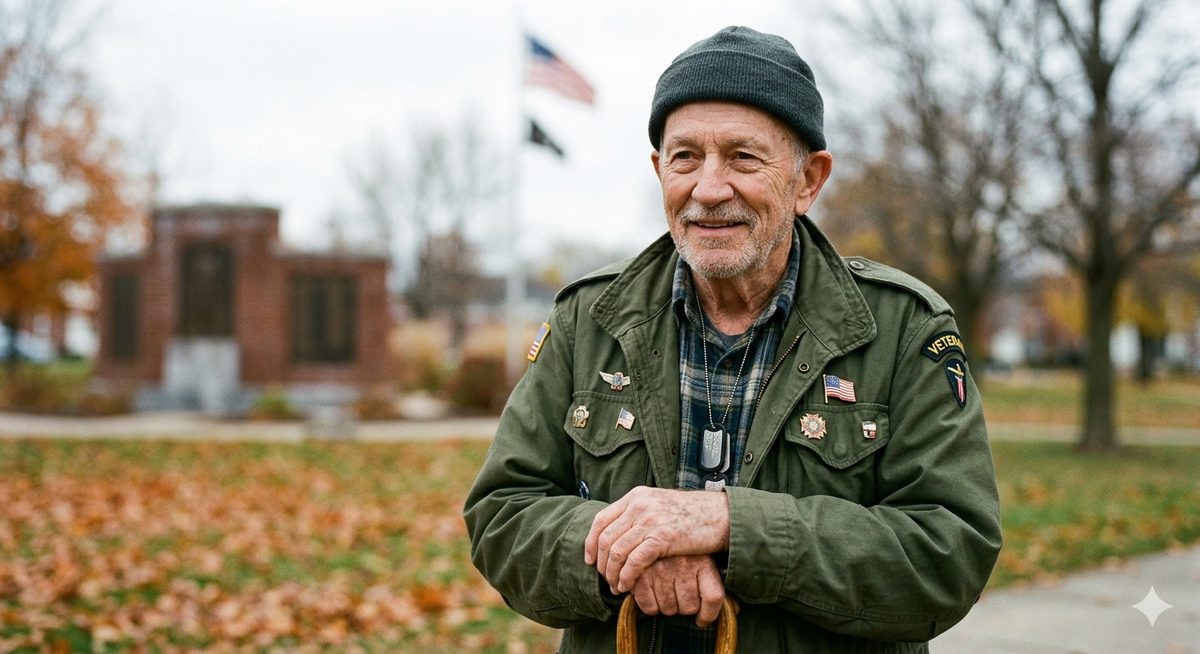
The Aid and Attendance (A&A) benefit is a financial assistance program provided by the U.S. Department of Veterans Affairs (VA). It is designed to help wartime veterans and their surviving spouses reduce the costs of long-term care, such as in-home care, assisted living, or nursing home care. This benefit is in addition to the VA pension and is tax-free. It is intended for individuals requiring care who also have limited assets and limited income below specific thresholds.
Eligibility Criteria
To qualify for the A&A benefit, applicants must meet the following requirements.
Military Service
- The veteran must have served at least 90 days of active duty, with at least one day during a wartime period.
- Must have been honorably discharged.
Times of war that qualify:
- World War II: December 7, 1941 – December 31, 1946
- Korean Conflict: June 27, 1950 – January 31, 1955
- Vietnam Era: August 5, 1964 – May 7, 1975 (or February 28, 1961 – May 7, 1975, for veterans who served “in country” before August 5, 1964)
- Gulf War: August 2, 1990 – a date to be determined by Presidential Proclamation or federal law (as the conflict is ongoing)
Age or Disability
The veteran must be 65 years or older, or permanently and totally disabled.
Specific A&A Requirements
At least one of the following must apply:
- The applicant requires assistance with daily living activities (e.g., bathing, dressing, eating, toileting, or transferring).
- The applicant is bedridden due to illness.
- The applicant resides in a licensed care community such as assisted living, memory care, or an adult care home due to physical or mental incapacity.
- The applicant has severe visual impairment (e.g., corrected vision of 5/200 or less in both eyes).
Financial Requirements
The applicant must meet income and asset limits set by the VA. These limits vary based on the applicant’s circumstances (e.g., single veteran, married veteran, or surviving spouse).
The veteran’s household income must be below the Maximum Allowable Pension Rate (MAPR), which is determined by the VA. The MAPR varies based on factors such as whether the veteran is single or married, whether they have dependents, and their medical rating (e.g., “aid and attendance” or “housebound”).
The Maximum Annual Pension Rates (MAPR) for VA benefits in 2026 are as follows:
- Veteran with no dependents: $17,441/year ($1,453/month)
- Veteran with a spouse or dependent child: $22,839/year ($1,903/month)
- Two veterans married to each other: $22,839/year ($1,903/month)
Aid & Attendance Pension (Enhanced Pension) – applicable to assisted living, memory care, and adult care homes:
- Veteran with no dependents: $29,093/year ($2,424/month)
- Veteran with a spouse or dependent child: $34,488/year ($2,874/month)
- Two veterans married to each other (both qualify for Aid & Attendance): $46,143/year ($3,845/month)
Housebound Pension – not capable of leaving home without assistance (Enhanced Pension):
- Veteran with no dependents: $21,313/year ($1,776/month)
- Veteran with a spouse or dependent child: $26,710/year ($2,225/month)
The exact pension amount a veteran receives depends on their countable income, which is subtracted from the MAPR to determine the benefit.
Asset Limits
The VA also imposes a net worth limit, which includes the veteran’s total assets plus their income (referred to as “Income for VA Purposes,” or IVAP). As of 2026, the net worth limit was $163,699, but this amount increases annually in line with Social Security’s cost-of-living adjustments.
Exclusions from the asset calculation:
- The veteran’s primary residence
- Up to two acres of land
- Personal property (e.g., furniture, clothing)
- Personal-use vehicle(s)
As an example, a married couple where both require care services and own a home valued at $600,000 and have income of $30,000 a year might qualify for this benefit.
Key Notes
- The income and asset thresholds are means-tested, meaning they are designed to ensure the benefits go to those with financial need.
- The VA reviews both income and assets to determine eligibility, and these limits are subject to change annually.
- If you’re considering applying, it’s important to check the most current limits and guidelines, as they may have been updated since the examples provided.
Benefit Maximum Amounts
2026 maximum rates paid out to a veteran or the surviving spouse of a veteran if the application is approved:
- Single Veteran: Up to $2,424/month
- Married Veteran: Up to $2,874/month
- Surviving Spouse: Up to $1,558/month
- Two Veterans Married: Up to $3,845/month
State-Specific Information
Washington State
- Washington Soldiers Home, 1301 Orting Kapowsin Hwy E, Orting, WA 98360 / Phone: 360-893-4515
- Spokane Veteran’s Home, 222 E 5th Ave, Spokane, WA 98202 / Phone: 509-344-5770
Oregon State
Oregon provides extensive support for veterans through the Oregon Department of Veterans’ Affairs (ODVA). Key programs include:
- Oregon Veterans’ Homes: located in The Dalles and Lebanon, these homes offer long-term care tailored to veterans’ needs.
- Conservatorship Services: ODVA can act as a conservator to manage finances for veterans unable to do so themselves.
- Representative Payee Services: helps veterans manage their income and expenses.
- VA Health Care for Aging Veterans: offers geriatric and extended care services.
For more information, veterans in Oregon can contact ODVA at 1-800-692-9666.
How to Apply
Gather documentation:
- Military discharge papers (DD-214)
- Medical records showing the need for assistance
- Financial statements
Submit an application: Applications can be submitted through the VA or with the help of a Veterans Service Officer (VSO) or a private-pay professional who assists with A&A applications.
Seek assistance: Organizations like American Veterans Aid and VeteranAid.org provide guidance and support for the application process, or you can select a private-pay professional to assist you.
Regional and County Resources in Washington
- Clark County Veteran’s Assistance Center: 907 Harney St, Ste 200, Vancouver, WA 98660 / Phone: 360-693-7030
- Island County Veterans Assistance
- Pierce County Veteran’s Program: 3602 Pacific Ave #200, Tacoma, WA 98418 / Phone: 253-798-7449
- Seattle VA Regional Benefit Office: 915 2nd Ave, Seattle, WA 98174 / Phone: 800-827-1000
- Skagit County Veteran Services – multiple locations / Phone: 206-843-5726
- Snohomish County Veterans’ Program: 3000 Rockefeller Ave (Lower Level of Drewel Bldg East) / Phone: 425-388-7255
- Spokane County Veterans’ Services: 1117 N Evergreen Rd / Phone: 509-477-3690
- Spokane Vet Center: 13109 E Mirabeau Pkwy, Spokane, WA 99216 / Phone: 509-444-8387
- Thurston County Veterans Assistance Program: 3000 Pacific Ave SE, Olympia, WA 98501 / Phone: 800-827-1000
- Whatcom County Veterans’ Program: 509 Girard St, Bellingham, WA / Phone: 360-778-6050 or 360-410-5380
- Whidbey Veterans Resource Center: 723 Camano Ave Rm 403 Bldg C, Langley, WA 98260 / Phone: 360-331-8081
Regional and County Resources in Oregon
Veterans in Oregon can receive free, accredited assistance with Aid and Attendance applications through the Oregon Department of Veterans’ Affairs (ODVA), county-level Veteran Service Offices (VSOs), and federal VA Regional Offices. It is highly recommended to call ahead to schedule an appointment.
- Clackamas County Veterans Services: 2051 Kaen Road, Suite 281, Oregon City, OR 97045 / Phone: 503-650-5631
- Marion County Veteran Services: 780 Commercial St. SE, Ste. 302, Salem, OR 97301 / Phone: 971-707-4400
- Multnomah County Veteran Services: 421 SW Oak St #100, Portland, OR 97204 / Phone: 503-988-8387
- Oregon Department of Veterans’ Affairs (ODVA) Headquarters: 700 Summer St. NE, Salem, OR 97301 / Phone: 503-373-2085 or 800-692-9666
- Portland VA Community Resource and Referral Center (CRRC): 308 SW 1st Avenue, Ste 155 (Lawrence Bldg), Portland, OR 97204
- Portland VA Regional Benefit Office: 100 SW Main Street, Floor 2, Portland, OR 97204 / Phone: 800-827-1000
- Washington County Veterans Service Office: 5240 NE Elam Young Parkway, Suite 300, Hillsboro, OR 97124 / Phone: 503-846-3047 or 503-846-3060
- Yamhill County Veteran Services Office: 340 NE Kirby St, McMinnville, OR 97128 / Phone: 503-434-7503
Oregon has 36 county veteran service offices in total; contact the ODVA for a complete list.
What to Bring to Your Appointment
- DD214 (discharge papers)
- Medical records/evidence showing the need for assistance (from doctors)
- Financial records (bank statements, income information)
- Marriage certificate/divorce decrees (if applicable)
You will need to complete VA Form 21-2680, which must be filled out by both a doctor and the applicant to apply for the benefit.
Approval for Aid & Attendance can take anywhere from 2 to 14 months. Fee-for-service professionals say they can help expedite the process. Benefits are paid retroactively to the date the VA receives and logs the application.
Fee-for-Service Professionals
The following fee-for-service professionals offer assistance with Aid & Attendance applications:
- Patriot Angels: 844-757-3047
- Steele Capital Management: 400 Union Ave SE #200, Olympia, WA 98501 / Phone: 877-658-0354
- Wall Law Group: 51 W Dayton St Ste 305, Edmonds, WA 98020 / Phone: 425-670-1560
This document was prepared based on interactions 1st CHOICE staff have had over the past three decades of serving veterans, combined with internet research to locate additional details and resources.
The information in this document may not be completely correct. Only the Veterans Administration can define the parameters for qualifying for A&A. 1st CHOICE Advisory Services, Inc. cannot be held responsible for any loss, damage, or harm that may arise from the information that appears or is missing from this document.